Raw chicken juice does not care whether a kitchen looks expensive. It cares about the surface beneath it: whether residue can be removed, whether moisture is allowed to linger, and whether the surface can be fully cleaned after prep. So, are porous counters less sanitary? They can be - especially when they are unsealed, damaged, or used as a cutting surface - but porosity alone does not make a countertop unsafe.
The higher standard is simpler: choose materials that are easy to clean, maintain them correctly, and keep knife work on a dedicated, non-porous board. A beautiful counter should not require guesswork after every meal.
Are Porous Counters Less Sanitary in Practice?
A porous material has tiny openings that can absorb liquid, oils, pigments, and organic residue. Natural stone, concrete, grout, and wood all vary in porosity. When their protective seal fails or wears away, spills can move below the visible surface instead of staying on top where a wipe can remove them.
That does not mean every porous countertop is dirty. A properly sealed stone counter, cleaned promptly and resealed on schedule, can be a practical kitchen surface. The concern is margin for error. Non-porous materials give contaminants fewer places to settle. Porous materials demand more attention to get the same level of confidence.
For serious home cooks, that difference matters most around high-risk prep: raw meat, seafood, eggs, and unwashed produce. A countertop may look clean while holding moisture or residue in a hairline crack, worn seal, grout joint, or etched patch. Surface appearance is not the same as cleanability.
Porosity Is Only One Part of Kitchen Hygiene
A surface is not hygienic simply because it is non-porous. Hygiene depends on how the material performs under real use. Can it tolerate routine cleaning? Does it have seams or deep scratches? Does it stain, crack, or chip? Can you see spills clearly enough to clean them before they dry?
A glossy stone slab with an intact seal may be easier to maintain than a neglected wood counter. Conversely, a non-porous surface covered in knife scars, sticky residue, or uncleaned seams is not a clean prep environment. The material establishes the baseline. Your cleaning practices determine the result.
There is also a critical distinction between cleaning and sanitizing. Cleaning removes visible soil and food residue. Sanitizing reduces microorganisms to safer levels after the surface is already clean. Spraying a sanitizer over grease, crumbs, or dried protein does not solve the underlying problem. First remove the mess. Then follow the product directions for the appropriate contact time.
How Common Counter Materials Compare
Natural Stone: Premium, but dependent on sealing
Granite, marble, soapstone, and other natural stones bring visual depth that manufactured materials cannot duplicate. Their hygiene profile, however, depends heavily on the specific stone and its seal.
Granite is often described as durable, but it is not automatically non-porous. Some slabs are denser than others, and many benefit from periodic sealing. Marble is generally more vulnerable to etching and staining from acidic foods, which can create dull or roughened areas that are harder to keep looking and feeling pristine. Soapstone is relatively dense, though its softer surface can scratch.
Use natural stone confidently for serving, staging, and general kitchen work when it is maintained. Do not treat it as a cutting board. Knife work can damage the counter, dull the blade, and create new places for residue to collect.
Concrete: Strong visual impact, higher maintenance
Concrete can be customized in color, shape, and finish. It is also inherently porous unless it is sealed. That seal is not a one-time promise. Heat, abrasion, acidic spills, and daily cleaning can wear it down over time.
The risk is not that concrete is inherently unsanitary. The risk is that its performance changes when maintenance slips. If water darkens the surface or food stains appear quickly, the protective barrier may need attention. A premium kitchen should not leave you wondering what absorbed into yesterday's spill.
Wood and butcher block: Warm, workable, not carefree
Wood counters have an unmistakable appeal. They are warmer underhand, easier on dropped glassware, and naturally suited to certain kitchen styles. They also require disciplined care.
Wood expands and contracts with humidity. It can scar, split, and absorb moisture if left wet or improperly finished. Some woods and finishes perform better than others, but butcher block should be treated as a maintained surface, not a wipe-and-forget one. Clean spills quickly, avoid standing water, and refresh the finish as needed.
A wood counter may be a deliberate design choice. It is not the simplest choice for raw-protein prep.
Quartz, laminate, and solid surface: Easier daily cleanup
Engineered quartz, quality laminate, and many solid-surface counters are designed to resist absorption. For day-to-day kitchen cleanup, that is a meaningful advantage. Spills stay on the surface, making them easier to wipe away before they spread or stain.
These materials still have limits. Quartz can be damaged by extreme heat. Laminate can fail at edges and seams. Solid-surface materials can scratch. None should become your chopping block. Cleanability is a strength, not permission to abuse the surface.
Stainless steel: The professional benchmark
Stainless steel is non-porous, corrosion-resistant, and familiar in commercial food environments for a reason. It does not need sealing, does not absorb odors or liquids, and handles frequent cleaning without the ongoing vulnerability of porous materials.
It can scratch, and scratches are visible on brushed finishes. But scratches do not turn stainless into an absorbent surface. For homeowners who value a precise, minimalist kitchen and a high standard of clean, stainless remains a serious material choice.
The Hidden Weak Points: Seams, Grout, and Damage
The most sanitary countertop material can still have weak points. A stone slab may be easy to clean while the backsplash grout behind it collects grease. A laminate surface may be non-porous until water reaches a damaged edge. A quartz counter may resist staining, but crumbs can lodge along the sink seam.
Inspect the places you rarely notice: around the faucet, near the cooktop, beside the sink, and at countertop joints. If caulk is split, grout is crumbling, or a sealant has worn away, repair it. Cleanliness is often won or lost in the details, not the center of the counter.
A Better Food-Prep Standard
Do not prepare food directly on the countertop when a dedicated board can do the job better. Counters are built to support the kitchen. Cutting boards are built to receive the knife.
For raw proteins, use a board that can be thoroughly cleaned after each session and keep it separate from ready-to-eat foods. Wash the board and surrounding counter with hot, soapy water, then sanitize when the task calls for it. Dry the area instead of leaving water pooled near seams, wood, or stone.
Avoid harsh, improvised cleaning methods that damage the finish you rely on. Acidic cleaners can etch natural stone. Abrasives can wear coatings and dull surfaces. Follow the care requirements for the material in front of you, not a one-size-fits-all cleaning hack.
The Smart Upgrade Is a Defined Prep Zone
The best kitchens create separation. Your countertop remains a clean, durable foundation for bowls, appliances, and plating. Your cutting board becomes the controlled surface for slicing, trimming, and chopping.
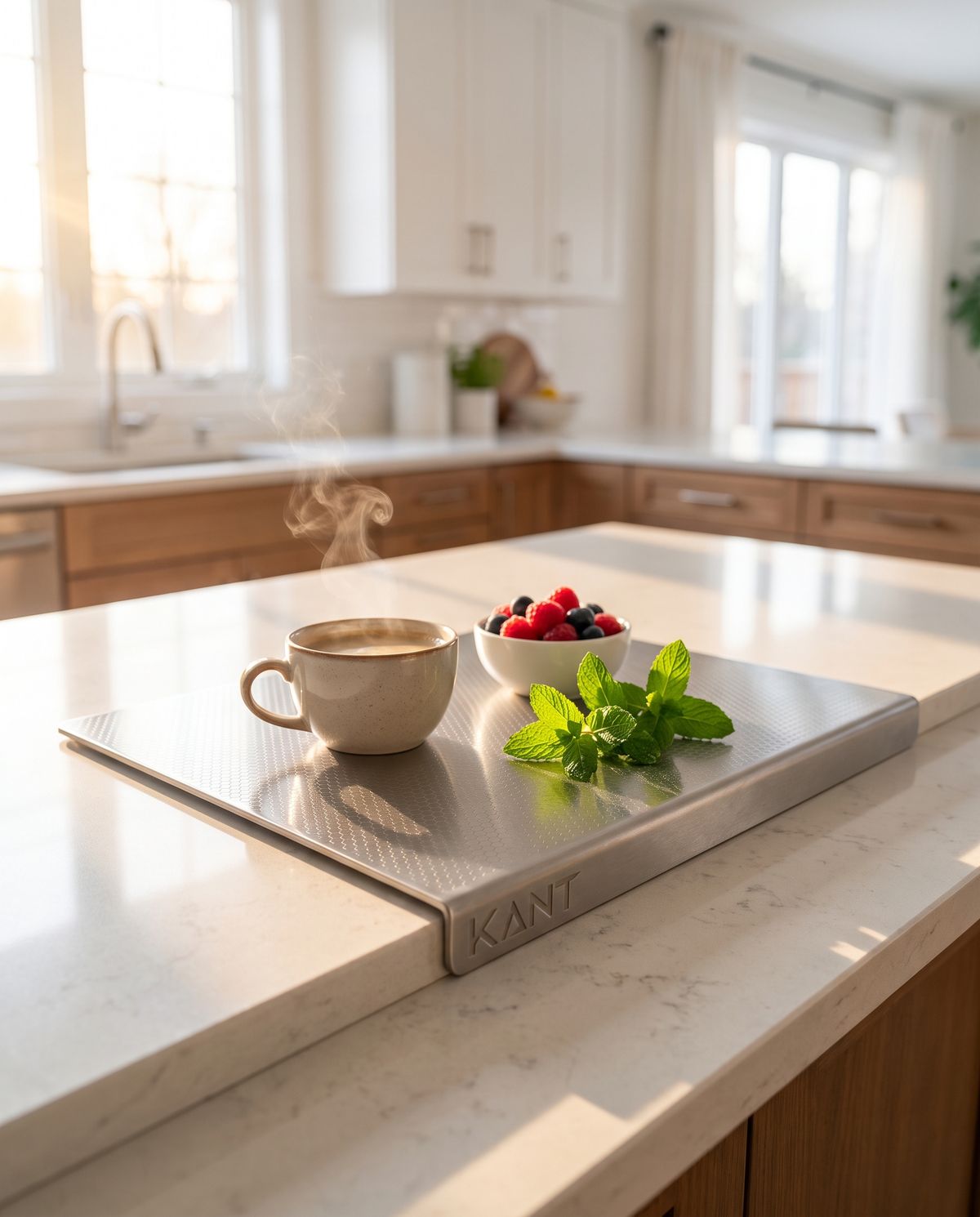
That is where material selection becomes decisive. A non-porous prep surface gives food residue nowhere to absorb, while a knife-respecting surface protects the tools you invested in. The KANT Workstation is engineered around that standard: micro-textured 304 medical-grade steel designed for clean prep and blade-conscious performance.
Porous counters are not automatically less sanitary. Neglected, damaged, or poorly sealed porous counters are less forgiving. Choose a counter you can maintain, protect it from knife damage, and give every meal a dedicated prep surface that meets a higher standard.